 1Like
1Like


- Blog
- How to avoid the summer slide
How to avoid the summer slide this summer

Key things to know about summer slide:📉 Most tutors see real learning loss: 65% of tutors surveyed report that half or more of their students return in September having lost momentum or confidence.⏱️ You don't need hours a day: 43% of tutors say just 30 to 60 minutes of practice a week is enough to make a real difference. 🎮 Fun beats worksheets: Reading for pleasure and short, structured tutor sessions tied for the top spot as the most effective way to keep learning alive without it feeling like school. 📈 Demand rises before term starts: 61% of tutors notice higher demand for tutoring sessions in the weeks before school restarts. 👩🏫 Tutoring can be a fun way to stop the summer slide too: tutoring doesn't have to be a traditionnal class where the student revises textbooks. It can also be fun; going for a walk in the woods to review biology concepts, creating fun maths challenges, etc. Talk to your private tutor and ask them to make learning fun for your child. |
If you've ever felt that dip in confidence when your child picks up a school book in September, you're not imagining it. Learning to avoid summer slide doesn't mean turning your summer into a second school term though. It means weaving a little bit of learning into the things your family already enjoys.
This guide walks you through what summer slide actually is, how to prevent the summer slide by age group, and how a private tutor can fit into your summer without ever feeling like a chore. If you're ready to explore in-person or online private tutoring as one option among many, we'll show you exactly where it fits.
Content Table
What is summer slide?
Summer slide describes the dip in academic skills and confidence that can happen over the long school break, when the daily structure of school disappears for weeks at a time.
It's not about your child "forgetting everything." It's more subtle, a bit of rustiness in maths facts, a slower recall on vocabulary, or simply needing a week or two to feel settled again once term starts.
According to research from the Mayo Clinic Health System, students can lose around two months of reading skills and nearly three months of maths skills over the summer break on average.
Our own data and statistics on summer learning loss from our survey of 743 tutors backs this up from the tutor's side: 65% of tutors we surveyed said half or more of their students come back in September having lost some momentum or confidence.
How much learning can children lose over summer?
The honest answer is: it depends. Some researchers argue the effect is smaller than once thought, especially for confident, engaged students. Others still see a clear pattern, particularly in maths.
A few figures worth knowing, from a survey of 743 UK-based tutors from FindTutors:
- 39% of tutors say the drop they see after summer is more noticeable now than it was five years ago,
- 29% of tutors say students typically lose a mix of knowledge, confidence, and motivation all at once, not just one of the three,
- Only 12% of tutors think summer learning loss isn't really an issue for their students.
The most common early sign, according to tutors, is students making basic mistakes they wouldn't have made before the break, followed by seeming tired or less engaged than usual. Both are useful things to watch for in the last couple of weeks of the holidays.

Common signs of summer learning loss
Beyond the general drop in confidence, tutors surveyed pointed to a handful of clear, recurring signs that summer learning loss is setting in. Knowing what to look for makes it much easier to step in early, before a small gap turns into a bigger one.
- Basic mistakes creeping back in: the most commonly flagged sign, cited by 31% of tutors, is a child making errors they'd already mastered before the break, like simple spelling slips or careless mistakes in maths,
- Tiredness or low engagement: almost a quarter of tutors say students simply seem more tired or less switched on in general, even outside of any academic task,
- Needing more repetition than usual: 22% of tutors notice students taking longer to recall things, needing a concept explained two or three times where once would have done,
- Avoiding or dragging their feet on lessons: around 1 in 5 tutors say reluctance to start a session at all is often the earliest warning sign, even before mistakes start showing up.
Taken together, these signs suggest summer learning loss rarely shows up as one single symptom. It's usually a mix of rustiness, tiredness, and a dip in confidence, which is exactly why short, varied activities tend to work better than a single fix. Catching one or two of these signs in the final weeks of the holidays is a good nudge to introduce a little light structure before term starts and make the return to school easier.
Age by age: how to prevent the summer slide
Every age group needs a slightly different approach if you want to stop the summer slide without a daily battle over "doing work." Here's how to think about it by age groups.
Ages 5 to 7 (early primary)
At this age, learning is best hidden inside play. A few ideas:
- Read together every day, even just a picture book at bedtime, letting them choose the story,
- Practise counting and simple sums through everyday moments, like counting steps or sharing out snacks,
- Play simple phonics or letter games in the car or at the table,
- Visit the library for a summer reading challenge, most run free ones over the holidays,
- Sing nursery rhymes or simple songs together to build vocabulary without them noticing,
- Sort laundry or toys by colour, size, or type to practise early maths and categorising skills,
- Draw and label pictures of things seen on a walk, like flowers, bugs, or clouds,
- Play "I spy" with letters or numbers on car journeys or in the supermarket,
- Water play in the garden or bath is a fun way to introduce early science concepts like floating and sinking.
Ages 8 to 11 (upper primary)
Children in this age bracket can handle a bit more structure, as long as it stays light and interest-led.
- Let them pick their own books, comics count too, and audiobooks are a great option for reluctant readers,
- Bring maths into cooking: measuring, halving recipes, and working out cooking times all count as real practice,
- Try a family trivia night or a board game evening to build vocabulary and quick thinking,
- Set a small budget for a day out and let them plan and track the spending themselves,
- Start a simple diary or holiday scrapbook to keep writing skills ticking over,
- Try a nature scavenger hunt at a local park to combine exercise with observation and science,
- Encourage letter or postcard writing to a friend or relative to practise handwriting and structure,
- Introduce a times tables app or game for short, competitive bursts of practice,
- Plan a simple science experiment at home, like growing seeds or building a volcano, to spark curiosity.
Ages 12 to 14 (early secondary)
This is a good stage to link learning to their own interests rather than schoolwork directly.
- Encourage journaling or creative writing about their summer, holiday, or a hobby,
- Use travel, even a day trip, as a chance to practise a foreign language in real situations,
- Introduce them to a documentary or podcast on a topic they're curious about,
- Keep an eye on SATs or Key Stage 3 content they'll need to build on come September,
- Encourage them to start a small personal project, like a blog, playlist, or short film, to build research and organisation skills,
- Try cooking a more ambitious recipe together to practise following multi-step instructions and measurements,
- Set a reading challenge around a book series that's been adapted into a film or show they enjoy,
- Get them involved in planning a family outing, including researching timings, costs, and directions,
- Encourage them to teach a younger sibling or cousin something they learned last term, since explaining is a great way to reinforce knowledge.
Ages 15 to 18 (GCSE and A-Level years)
For older teens, the summer can be a genuine opportunity, particularly before exam years.
- A little regular revision, 30 to 60 minutes a few times a week, is enough to keep GCSE or A-Level content fresh according to most tutors surveyed,
- Past exam papers in short bursts work better than long revision marathons,
- If they're heading into exam years, this is a good time to identify weaker topics before the pressure builds,
- Encourage independent reading around subjects they'll study, especially for English Literature or humanities,
- Suggest a short online course or taster session in a subject they're considering for further study,
- Encourage a part-time job or volunteering, which builds real-world maths, communication, and time-management skills,
- Use flashcard apps for quick, mobile-friendly revision of key facts or vocabulary during downtime,
- Ask them to summarise a topic from last term in their own words, either written or recorded as a short video,
- Encourage them to research universities, courses, or career paths of interest, which builds research skills while staying motivating.
Find a GCSE tutor for the summer
One tutor we surveyed put it well: the goal isn't to skip learning, it's to make it feel like doing, not studying. Keeping sessions short and playful, and letting your child have some choice in what they do, tends to work far better than a fixed daily worksheet.
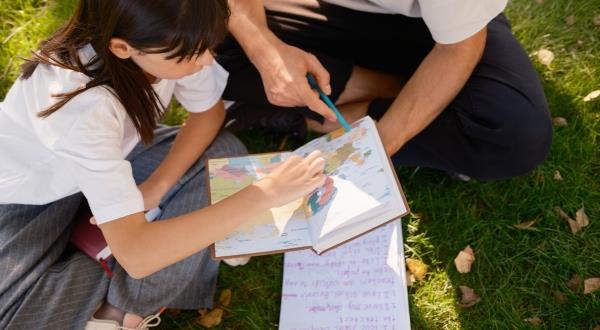
Can a tutor help prevent the summer slide?
A private tutor doesn't have to mean textbook drills. In fact, the tutors we surveyed rated short, structured tutoring sessions just as effective as reading for pleasure when it comes to keeping learning alive over summer.
The right tutor can turn revision into something your child actually looks forward to. A few examples of what this can look like in practice:
- A maths tutor turning fractions into a cooking or budgeting challenge instead of a worksheet,
- An English tutor building sessions around a book series or film your child already loves,
- A languages tutor practising conversation through role play, games, or planning an imaginary trip,
- A science tutor linking lessons to something your child is curious about, from space to animals.
This is exactly why demand for tutoring tends to rise as the summer goes on. 61% of tutors surveyed report noticeably or slightly higher demand for sessions in the weeks before school restarts, often from families who want a light refresher before term begins.
The key is communication. Let your chosen tutor know your child's interests, what motivates them, and what you're hoping to get out of the sessions. A good tutor will build the lesson around your child, not the other way round. You can browse online tutoring options if you'd rather keep things flexible around holidays and travel or can browse tutors to find one for in-person tutoring if you prefer this 1 to 1 format.

Helping your child ease back into the school routine
The last couple of weeks of summer matter more than they might seem. After weeks of relaxed bedtimes, late mornings, and flexible days, jumping straight back into a 7am alarm and a full timetable can feel like a shock to the system, for both children and parents. Easing back in gradually gives the body clock time to adjust, reduces those first-week meltdowns over tiredness, and helps children arrive on day one feeling settled rather than overwhelmed. It also gives you a chance to catch and gently address any of the summer slide signs mentioned earlier, before term properly begins. A calm, structured run-up tends to set the tone for a much smoother start to the year.
Ages 5 to 7 (early primary)
- Start moving bedtime back by 10 to 15 minutes every few days rather than all at once,
- Reintroduce the morning routine, like getting dressed and having breakfast at a set time, a few days before school starts,
- Read a book together about starting school or going back to school to talk through any worries,
- Lay out the school uniform and bag together so it feels familiar and exciting rather than stressful,
- Plan a fun activity for the first weekend back, so returning to school doesn't feel like the end of all the fun.
Ages 8 to 11 (upper primary)
- Shift bedtime and wake-up times back gradually over the final one to two weeks,
- Do a light recap of last term's topics together, just enough to jog their memory without it feeling like revision,
- Involve them in sorting their own school bag, stationery, and uniform so they feel prepared and in control,
- Talk through what they're looking forward to in the new term, alongside anything that feels daunting,
- Reconnect with school friends before term starts, even a quick playdate or video call helps ease any social nerves.
Ages 12 to 14 (early secondary)
- Gradually reintroduce a consistent sleep schedule, since teenagers' body clocks can shift significantly over a relaxed summer,
- Encourage them to check their timetable, subjects, and any new teachers so the first day feels less unfamiliar,
- Do a light review of key topics from last term, focusing on anything they found tricky,
- Get organised early: uniform, PE kit, and equipment sorted a few days ahead to avoid last-minute stress,
- Talk openly about how they're feeling about the new term, some nerves around new subjects or a new year group are normal.
Ages 15 to 18 (GCSE and A-Level years)
- Start easing back into a study-friendly sleep routine, especially important if exams are on the horizon this year,
- Encourage a short, focused review of last term's weaker topics to walk in feeling more confident,
- Help them plan out the first few weeks, including any deadlines, options choices, or upcoming assessments,
- Talk through their workload and any concerns about the year ahead, particularly for exam years,
- Encourage them to sort out practical things themselves, like their bag, folders, and timetable, to build independence and reduce first-week stress.
You're all set to prevent the summer slide!
Knowing how to avoid the summer slide doesn't mean giving up your summer to schoolwork. A little reading, some everyday maths, and the occasional short tutoring session go a long way, and our own survey of UK tutors backs this up again and again. If you'd like some extra support before term starts, you can always find a tutor who fits your child's pace and interests.
Find your tutor today to stop the summer slide
Frequently Asked Questions
➕ What does the term "summer slide" mean? |
|---|
| Summer slide refers to the dip in academic skills and confidence that can happen during the long summer break, when the structure of the school day disappears for weeks. It's not about forgetting everything, more a bit of rustiness that clears up once routine returns. |
➕ How to prevent the summer slide? |
| Short, regular practice tends to work best. Most tutors we surveyed say just 30 to 60 minutes a week, spread across reading, everyday maths, and the occasional tutoring session, is enough to make a real difference by September. |
➕ Can tutoring help avoid summer slide? |
| Yes. Tutors rated short, structured sessions as one of the most effective ways to keep learning alive over summer, on par with reading for pleasure. The key is choosing a tutor who builds lessons around your child's interests rather than sticking to a textbook. |
➕ How to keep kids busy over summer? |
| Everyday activities work surprisingly well: cooking, budgeting for a day out, reading books of their choice, board games, and gamified learning apps all count. Keeping sessions short and letting your child choose the activity tends to work better than a fixed schedule. |
➕ How to help kids go back to school smoothly? |
| In the final couple of weeks, start shifting bedtimes back towards term time, do a light recap of last term's topics, and sort out uniforms and school supplies early. A calm, gradual transition helps far more than a sudden switch on the first day back. |
SourcesOfficiel et sources externes🔗 Tips for preventing 'summer slide' — Mayo Clinic Health System Données propriétairesGoStudent survey of 743 UK-based tutors on summer learning loss (July 2026), internal data |
Did you like this article? Share it now
tutor in Barcelona Ciudad specalised in offering online lessons classes adapted to the needs of each student. My classes are designed to help you reach your goals.
Teaches Catalan, Spanish, French, Photography, Maths, All courses, GCSEs and A Levels for adults, Physics, History, Latin, German, English as a foreign language and English Language classes
Use our Smart Finder