 2Like
2Like


What are the Best Apps to learn Italian?

How can I learn Italian on my own? If this is the question you are asking yourself, the answer is easy: using digital resources. Nowadays, learning Italian on your own is very easy. On the internet you can find everything from ebooks, to online practice tests, online italian tutoring, to the best apps to learn italian available out there.
Due to the rising demand for Italian lessons, more and more digital resources are becoming available. Learning Italian gives you access to a job market that not everyone has, and not only do you have more job opportunities, but it is also a Latin language. Learning a Latin language will make it easier to learn others like French and Spanish.
When it comes to learning Italian, without a doubt, one of the most valuable resources are apps. Let's see how you can benefit from studying with this technology and which are the best apps for learning Italian.
We've grouped the ten options below by what they're actually good for, starting with the tools that get you speaking from day one.
Content Table
- Advantages of learning Italian through apps
- How to choose the best app to learn Italian?
- Best italian apps for live tutoring and real conversation practice
- The best gamified and structured self-study apps to learn italian
- Our top speaking and pronunciation-focused apps to learn italian
- The best italian apps to learn italian through vocabulary and memorisation
- The best apps to learn italian through language exchange
- Comparative table of the best apps to learn Italian
- Apps are a tool, not a substitute for real conversation
- Our top 3 picks
- Frequently asked questions about the best apps to learn Italian
Advantages of learning Italian through apps
To learn a language you need perseverance and time to practise. Italian language learning apps will make sure you do just that. After a short time of using them, you will notice your progress and you won't even realise how much time you've spent learning:
- You always take your Italian lessons with you. Nobody leaves home without their phone. So you can take advantage of any free moment, any break or even the idle time you waste commuting to take out your phone and use your Italian app.
- Monitor your progress. With the various applications that you can download, you can check in real time what you have learnt so far, what you are lacking or what you should improve. This way, you will learn Italian in an organised way and will be motivated to continue.
- You complete your learning. There are hundreds of apps for learning Italian and each of them has a specific use. While some will be more focused on grammar or vocabulary, others will be more focused on improving your conversational skills. Our recommendation is that you have everything in your repertoire.
How to choose the best app to learn Italian?
Before picking an app, it helps to get clear on what you actually want to get out of it, since the right choice depends entirely on your goals, your current habits, and how you learn best:
- Your main goal, whether that's mastering grammar rules, expanding vocabulary, improving listening comprehension, or building genuine speaking confidence over time,
- Your current level, since some apps are designed specifically for complete beginners while others assume you already know the basics and grammar fundamentals,
- How much structure you personally want, ranging from a fixed, guided curriculum you follow step by step to fully open-ended, self-directed practice,
- Your budget, as some tools are genuinely free to use indefinitely while others require an ongoing monthly or annual subscription to unlock full access,
- Whether you learn better working alone at your own pace, or with real-time feedback and correction from an actual person guiding you.
No single app ticks every one of these boxes on its own, and that's completely normal, since each tool is built with a different type of learner in mind. Most people actually get further, faster, by combining two or three complementary tools rather than relying on just one and hoping it covers everything.
Best italian apps for live tutoring and real conversation practice
If your main goal is actually speaking Italian, these three options connect you with real people rather than a screen. You'll get personalised feedback, natural conversation, and the kind of correction that helps mistakes stick the first time, whether you prefer a structured curriculum or full flexibility.
1. FindTutors
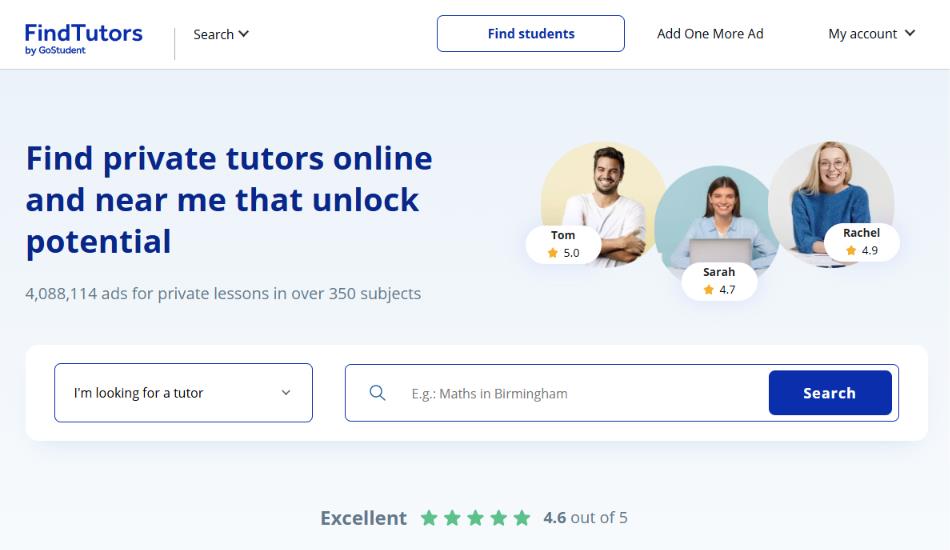
FindTutors connects you directly with real, native Italian tutors for one-to-one lessons, whether online or in person. Instead of tapping through the same exercises as everyone else, you get a tutor who listens to how you actually speak, corrects your mistakes as they happen, and adjusts the lesson around what you personally struggle with. Browsing and messaging tutors is free, and many offer a trial lesson so you can find the right fit before committing. It's less about ticking off modules and more about building the kind of confidence that only comes from real conversation.
Find Italian tutoring lessons for adults
Features:
- Browse and message Italian tutors for free,
- Choose online, in-person, or hybrid lessons,
- Filter by level, price, location, and availability,
- Take a free trial lesson with tutors who offer one,
- Read verified reviews from past students,
- Message tutors directly to agree on your own learning plan.
Price:
- Free to browse and contact tutors,
- Lesson rates are set individually, typically from around £10 to £20 an hour depending on the tutor's experience.
Pros:
- Real conversation practice from your very first lesson,
- Feedback tailored to your specific mistakes and goals,
- No subscription required to get started,
- Flexible scheduling around your own routine,
- Direct contact with your tutor, no algorithm in between.
Cons:
- Progress depends on how consistently you book lessons,
- No built-in gamified exercises between sessions.
Best for: Anyone who's tried self-study apps and hit a plateau, or who simply learns faster by talking to a real person rather than tapping through a screen. If your goal is genuine conversational confidence rather than just recognising words, this is the option that gets you there fastest, and it works for complete beginners too.
2. GoStudent UK
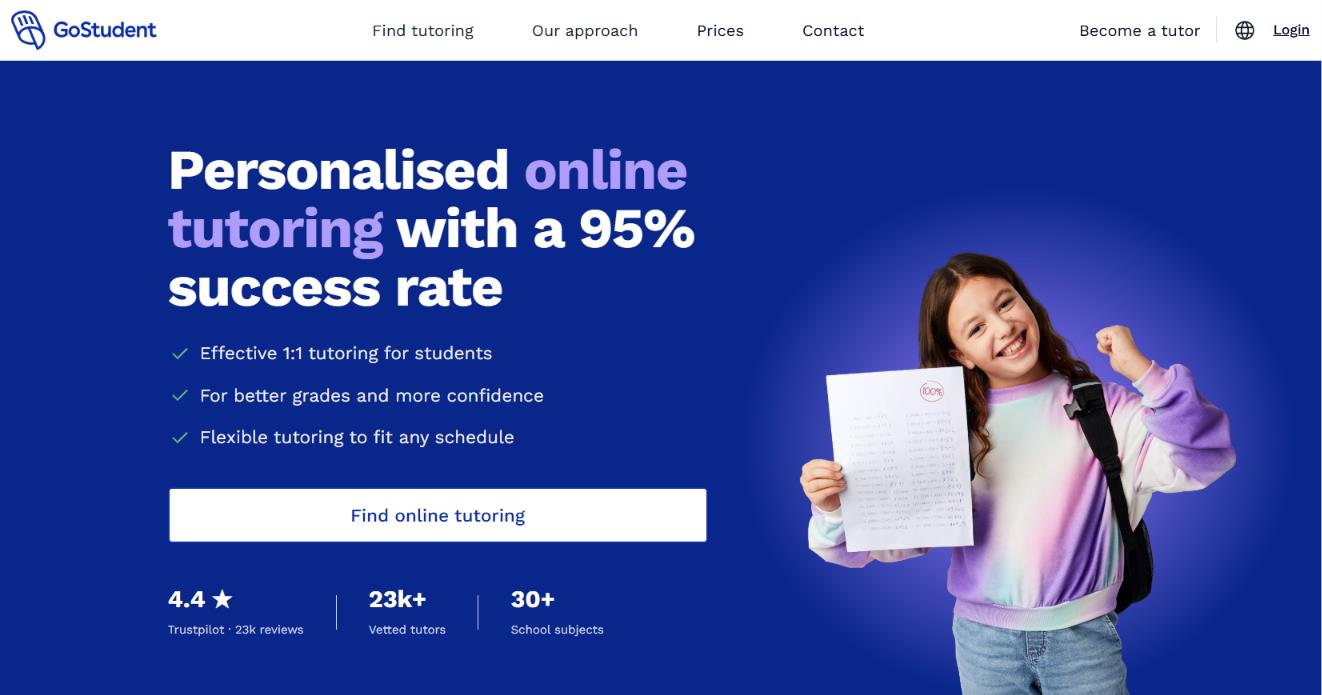
GoStudent offers structured, one-to-one online Italian tutoring built around a personalised learning plan rather than open-ended browsing. After a free consultation, you're matched with a tutor suited to your level and goals, and lessons take place in GoClass, GoStudent's interactive virtual classroom. Each 50-minute session comes with an automatic lesson summary and access to Magic Quizzes, so revision happens naturally between lessons. It suits learners, especially younger ones or those working towards a qualification, who want guidance and structure rather than piecing together their own curriculum from separate apps.
Features:
- Personalised tutor matching based on level and goals,
- Lessons held in GoClass, an interactive virtual classroom,
- Automatic lesson summaries sent after every session,
- Magic Quizzes generated at the end of each lesson,
- Free, no-obligation trial lesson,
- Lesson recordings available to review afterwards.
Price:
- Subscription-based, from roughly £27.81 to £32.09 per lesson depending on the plan,
- Free trial lesson with no card required.
Pros:
- Fully structured, guided curriculum,
- Tutors matched to your specific level and goals,
- Lesson summaries keep you on track between sessions,
- Magic Quizzes reinforce what you've just learned,
- Ideal for exam-focused or younger learners.
Cons:
- Online only, with no in-person option,
- Higher price point than most marketplace platforms.
Best for: Learners, particularly school-aged students or anyone working towards a specific exam or milestone, who want a guided, done-for-you curriculum rather than assembling their own mix of apps. It suits people who value structure and accountability over flexibility and lower cost.
3. iTalki
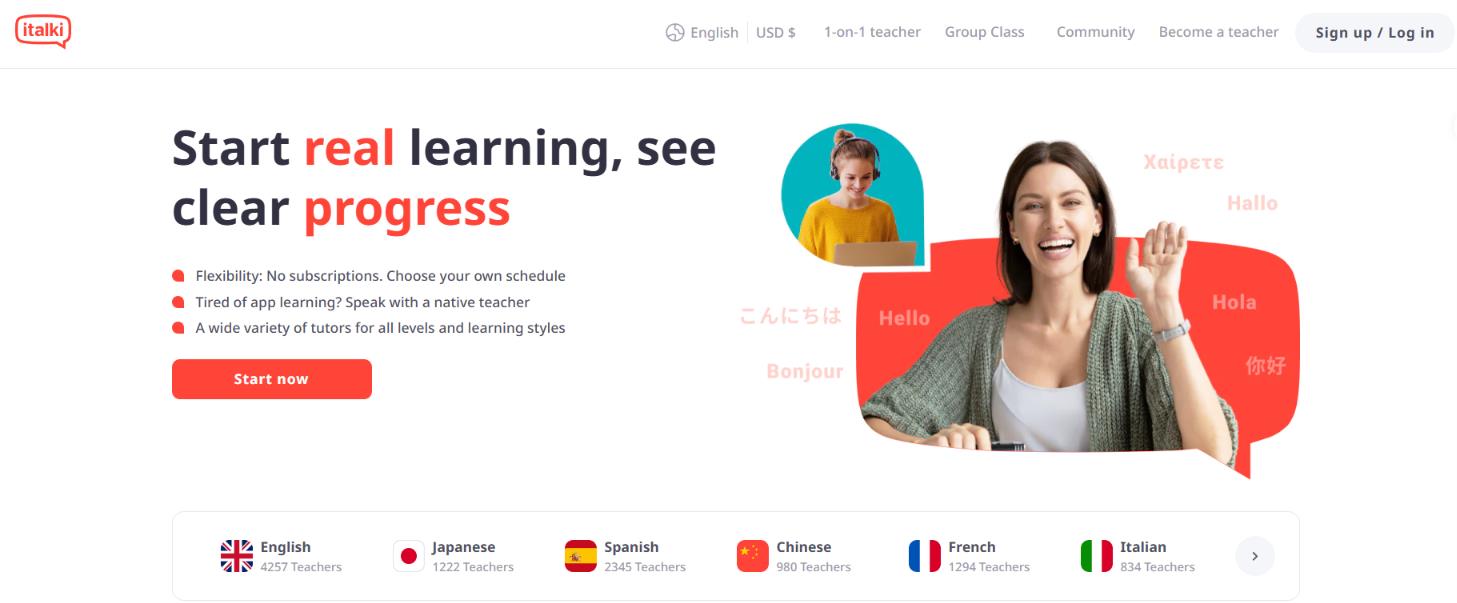
italki is a global marketplace of independent Italian tutors and language exchange partners, with a much larger pool to choose from than most dedicated tutoring platforms. You pay per lesson rather than committing to a subscription, and prices vary hugely depending on the tutor's experience and location. Alongside tutoring, italki also offers writing correction services, which is useful if you want feedback on something you've written in Italian. The trade-off is a slightly clunky payment system, since you need to top up credit before booking a lesson.
Features:
- Large global pool of Italian tutors and exchange partners,
- Pay-per-lesson pricing with no subscription required,
- Written work correction service available,
- Filter tutors by price, availability, and specialism,
- Community discussion forums for extra practice,
- Both professional teachers and informal conversation partners available.
Price:
- No subscription, pay per lesson,
- Typically £7 to £15 an hour, with specialist tutors charging more.
Pros:
- Huge choice of tutors at very different price points,
- No long-term commitment required,
- Useful writing correction feature,
- Easy to switch tutors if one isn't the right fit,
- Good for supplementing other apps with occasional speaking practice.
Cons:
- Requires topping up account credit before booking,
- Quality varies more widely given the size of the pool,
- Less structure than a dedicated tutoring platform,
- Not ideal if you want a consistent, ongoing relationship with one tutor.
Best for: Learners who want maximum flexibility and choice, and who are comfortable managing their own learning path rather than following a set curriculum. It works particularly well as a top-up to a self-study app when you just need regular speaking practice.
The best gamified and structured self-study apps to learn italian
These apps turn daily practice into a habit through bite-sized lessons, streaks, and rewards. They're ideal for building vocabulary and grammar at your own pace, whether you want a free, low-pressure start or slightly more structured, dialogue-based lessons to work through each day.
4. Duolingo
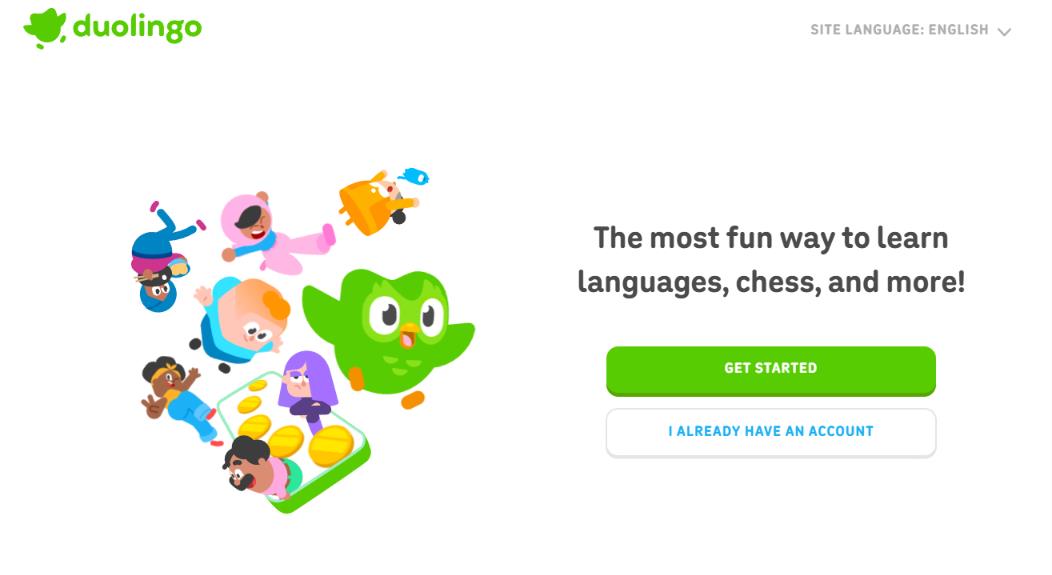
Duolingo is the most widely used Italian learning app, largely thanks to a genuinely useful free version. Its bite-sized, gamified lessons make it easy to build a daily habit, with streaks, badges, and friendly reminders keeping you consistent. It covers vocabulary and basic grammar well for beginners, though its Italian course is less extensive than some of its other European language offerings. For anyone wanting a low-pressure, no-cost way to start learning Italian today, it's still one of the easiest apps to simply open and get going with.
Browse our beginner level Italian tutors
Features:
- Free, gamified daily lessons,
- Streaks and rewards to build a consistent habit,
- Available on web, iOS, and Android,
- Offline lesson downloads with the paid version,
- Placement test to skip content you already know,
- Speaking exercises using your phone's microphone.
Price:
- Free with ads,
- Paid subscription from around £12.99 a month for an ad-free, offline experience.
Pros:
- Genuinely usable for free,
- Easy to build a daily habit,
- Beginner-friendly interface,
- Available across all major devices,
- Low barrier to just getting started.
Cons:
- Italian course is less extensive than competitors,
- Limited grammar explanation,
- Gets repetitive after the early levels,
- Doesn't build real conversational fluency on its own.
Best for: Absolute beginners who want a free, low-pressure way to start learning Italian vocabulary and basic grammar, and who are happy to build a daily habit before layering on speaking practice through a tutor or exchange partner.
5. Babbel
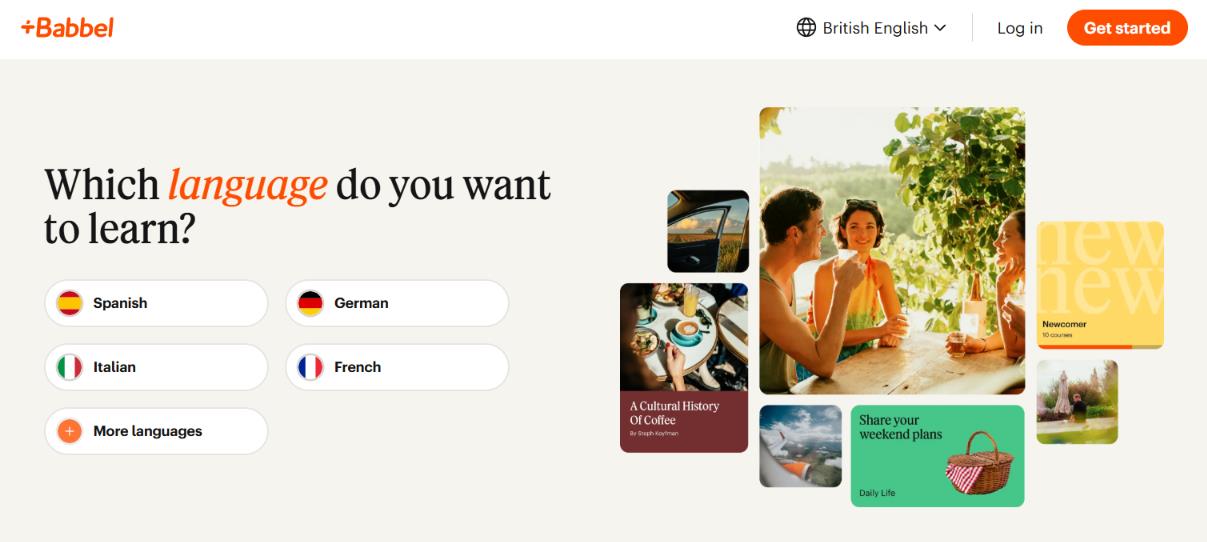
Babbel builds each lesson around realistic dialogue rather than isolated words, so you're exposed to how Italian is actually spoken from the start. Lessons run around 15 minutes, which makes it easy to fit into a daily routine, and the content is written specifically for Italian rather than translated from another language's course. Occasional grammar and culture notes tie everything together. It's a strong middle ground between Duolingo's simplicity and a fully structured course, though the free trial is limited to a single lesson.
Features:
- Dialogue-based lessons with native speaker audio,
- Bite-sized 15-minute sessions,
- Content written specifically for Italian, not translated,
- Grammar and culture notes throughout,
- Review sessions using spaced repetition,
- Available on web, iOS, and Android.
Price:
- One month from £12.95,
- Longer plans bring the monthly cost down, with a 12-month plan around £83.40 in total.
Pros:
- Genuinely useful dialogue-based content,
- Content built specifically for the language, not generic,
- Easy to fit into a daily routine,
- Clean, well-designed interface,
- Good balance of vocabulary and grammar.
Cons:
- Only one free lesson to try before paying,
- Can feel repetitive after a few levels,
- Limited variety in exercise types.
Best for: Learners who want structured, realistic dialogue practice without committing to a full course, and who are happy to pay a modest monthly fee in exchange for content that feels genuinely built for Italian.
Our top speaking and pronunciation-focused apps to learn italian
For learners who want their Italian to actually sound right, these apps put speaking and pronunciation front and centre. Expect speech recognition, native speaker feedback, and audio-led methods designed to sharpen how you say things, not just what you know.
6. Busuu
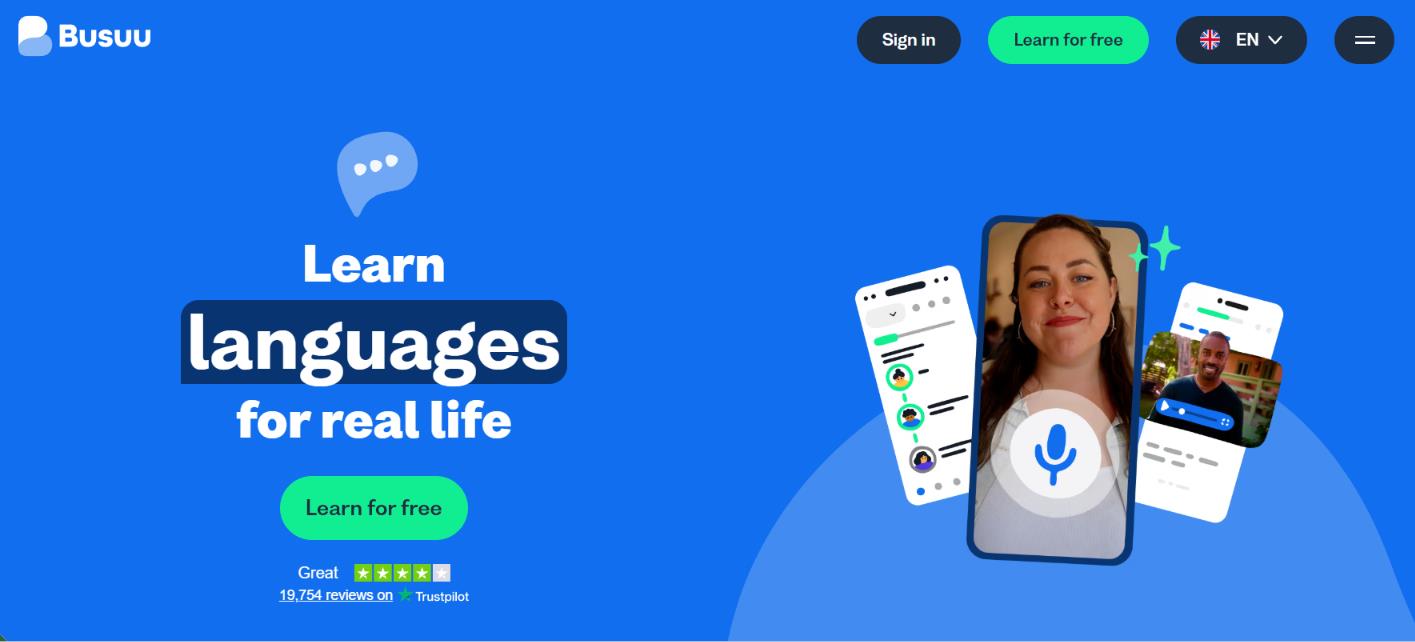
Busuu puts speaking front and centre, using speech recognition so you can check your pronunciation as you go. Its Italian courses are organised by topic, so you can focus on exactly what you need, whether that's everyday conversation or travel-specific vocabulary. A standout feature is community correction, where native Italian speakers review short exercises you submit, giving you real human feedback for free. The catch is that grammar lessons sit behind a paid plan, so the free version only takes you so far.
Features:
- Speech recognition for pronunciation practice,
- Courses organised by topic, including travel and everyday conversation,
- Community correction from native Italian speakers,
- Personalised study plans with Premium Plus,
- Offline access to downloaded lessons,
- Official certificates available with the top-tier plan.
Price:
- Free with limited access,
- Premium from £9.99 a month, Premium Plus from £13.99 a month.
Pros:
- Strong focus on speaking and pronunciation,
- Free community feedback from native speakers,
- Well-structured, topic-based courses,
- Personalised study plans available,
- Good for travel-focused Italian.
Cons:
- Grammar lessons are locked behind a subscription,
- Free version is fairly limited,
- Community feedback speed depends on user activity.
Best for: Learners who want to prioritise pronunciation and speaking confidence from early on, and who like the idea of getting real feedback from native speakers without paying for a tutor for every single correction.
7. Mondly
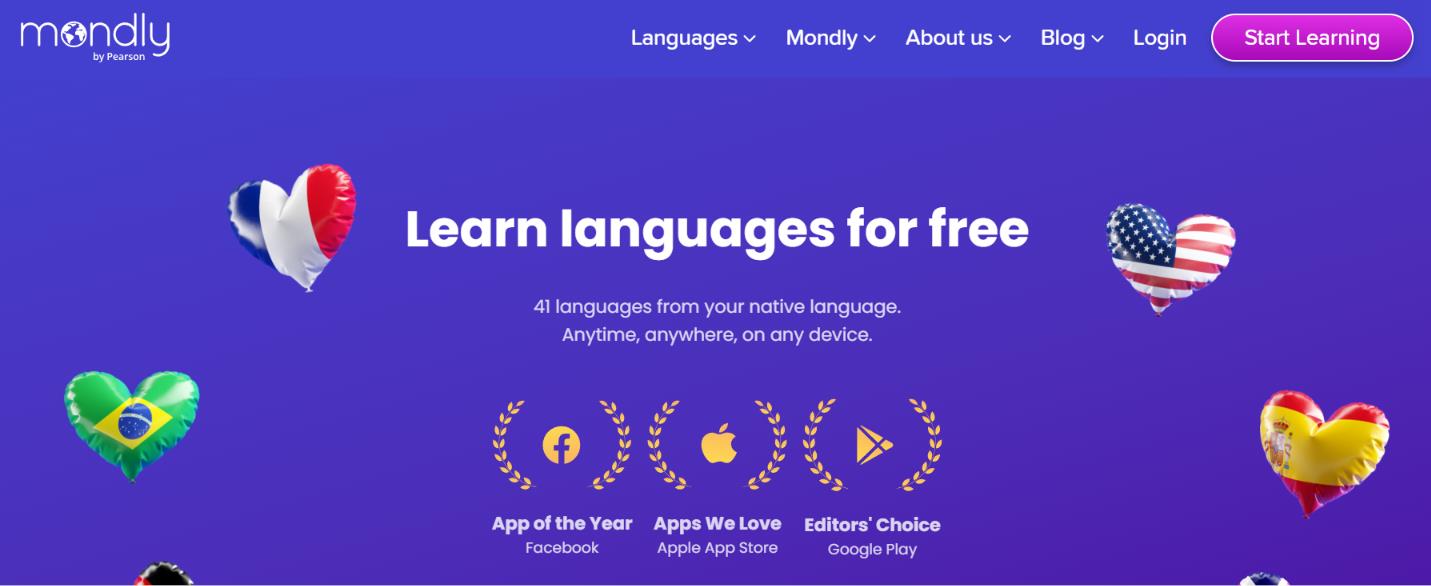
Mondly leans into novelty, offering chatbot conversations and augmented reality features alongside its daily lessons. Each day brings a new lesson rather than recycled content, and the app adapts slightly based on what you've already covered. A genuinely handy touch is the ability to tap any verb to instantly see its full conjugation with pronunciation. It works well if you enjoy exploring different features, though the free version is limited and some exercise types feel similar to Duolingo or Babbel.
Find in-person Italian tutoring
Features:
- Daily lessons that change rather than repeat,
- AI chatbot conversations for practice,
- Tap-to-conjugate verb tool with pronunciation,
- Augmented reality vocabulary features,
- Support for learning through languages other than English,
- Available on web, iOS, and Android.
Price:
- Limited free access,
- One month from £9.99, annual plan for one language around £47.99.
Pros:
- Fresh daily content rather than repeated exercises,
- Handy instant verb conjugation tool,
- Good variety of interactive features,
- Adapts lessons based on your progress,
- Fun for learners who like exploring an app.
Cons:
- Free version offers very little,
- Some exercises feel similar to other gamified apps,
- Extra languages cost more on top.
Best for: Learners who enjoy a bit of novelty in their study routine and want a mix of chatbot practice, grammar tools, and gamified exercises in one place, rather than a single, linear course structure.
8. Pimsleur
Pimsleur takes a completely audio-based approach, built around spaced recall and guided repetition rather than screens and flashcards. Each lesson is designed to be completed just once a day, walking you through dialogue, then unexpectedly asking you to recall phrases shortly after, which sharpens memory more effectively than passive listening. It's particularly strong for pronunciation and intonation, both of which matter a lot in Italian. The main drawback is cost, since the full course represents a serious financial commitment if bought outright.
Features:
- Fully audio-based lessons, ideal for hands-free practice,
- Spaced recall method to strengthen memory,
- Syllable-by-syllable pronunciation breakdown,
- Vocabulary review through quizzes and flashcards,
- English-language guidance throughout each lesson,
- Available on web, iOS, and Android.
Price:
- Full course (levels 1 to 5) around £430,
- Monthly subscription available from around £15 a month.
Pros:
- Excellent for pronunciation and intonation,
- Effective spaced recall method,
- Easy to build into a daily routine,
- Strong structure for complete beginners,
- Feels like guided teaching rather than solo study.
Cons:
- Expensive if bought as a full course,
- Only one free lesson to try,
- Requires speaking aloud, so less practical in public.
Best for: Learners who want to prioritise pronunciation and listening comprehension and are happy to learn hands-free, whether that's during a commute or while doing something else, rather than sitting and tapping through an app.
The best italian apps to learn italian through vocabulary and memorisation
Vocabulary is the foundation everything else builds on, and this app is built entirely around helping it stick. Using spaced repetition and real-context clips, it's designed for steady, long-term retention rather than cramming, making it a solid daily companion alongside other tools.
9. Memrise
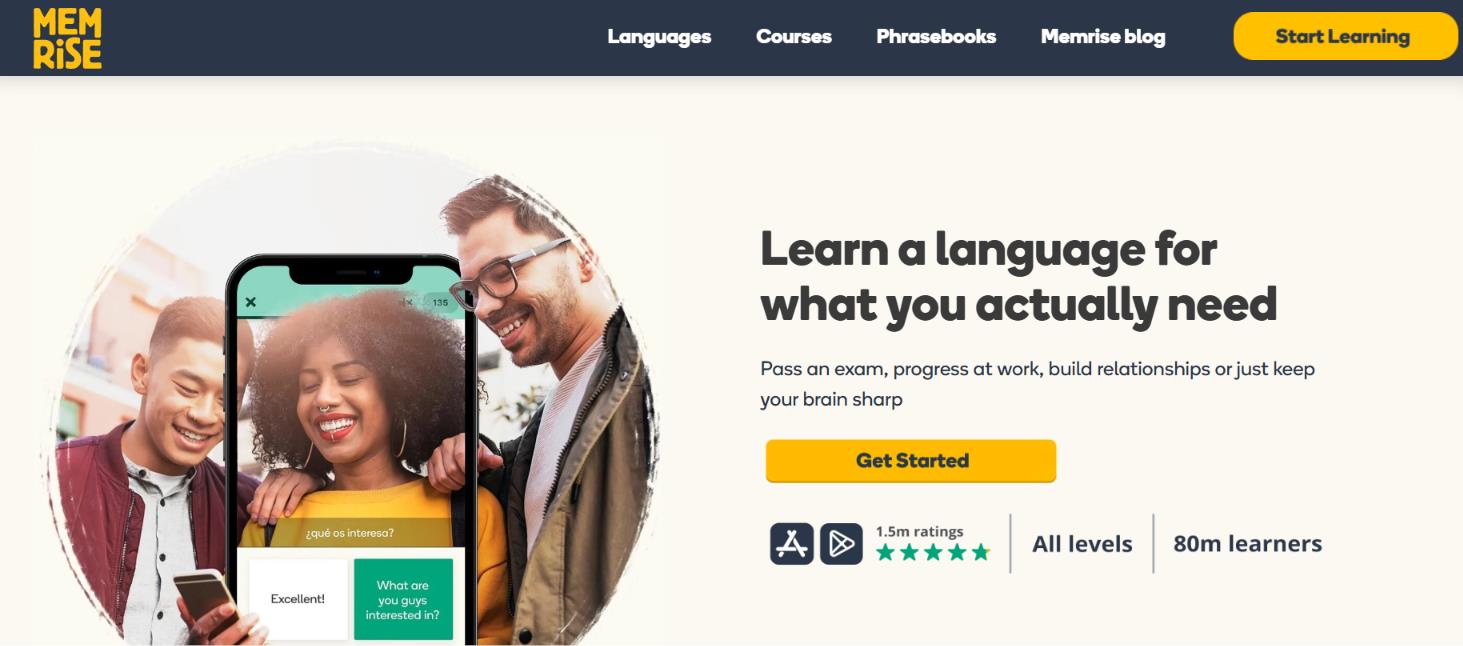
Memrise focuses on memorisation through spaced repetition, using short video clips of real native speakers on the street to introduce vocabulary in context. This makes new words feel more natural than flashcards alone, since you associate each phrase with a real face and setting. The free version is genuinely generous, and you can set daily reminders to keep reviewing consistently. It works best as a vocabulary-building companion rather than a complete course, since grammar explanation is minimal.
Features:
- Spaced repetition for long-term vocabulary retention,
- Real native speaker video clips for context,
- Daily reminders to keep reviews consistent,
- Multiple learning modes, including listening and grammar practice,
- Ability to study several languages at once,
- Available on web, iOS, and Android.
Price:
- Free with a generous amount of content,
- One year around £45, lifetime access around £139.99.
Pros:
- Strong free tier with plenty of content,
- Vocabulary presented in real, natural context,
- Good for building long-term retention,
- Flexible for studying multiple languages,
- Easy to fit into short daily sessions.
Cons:
- Limited grammar explanation,
- Can feel repetitive over time,
- Some content varies in quality since users create courses.
Best for: Learners who want to build a solid vocabulary base through short, consistent daily reviews, and who don't mind pairing it with another resource for grammar and speaking practice.
The best apps to learn italian through language exchange
If budget matters or you simply want practice with everyday native speakers rather than tutors, language exchange apps are worth a look. You'll trade help in your own language for Italian conversation, making this a genuinely free way to build real speaking confidence.
10. Tandem
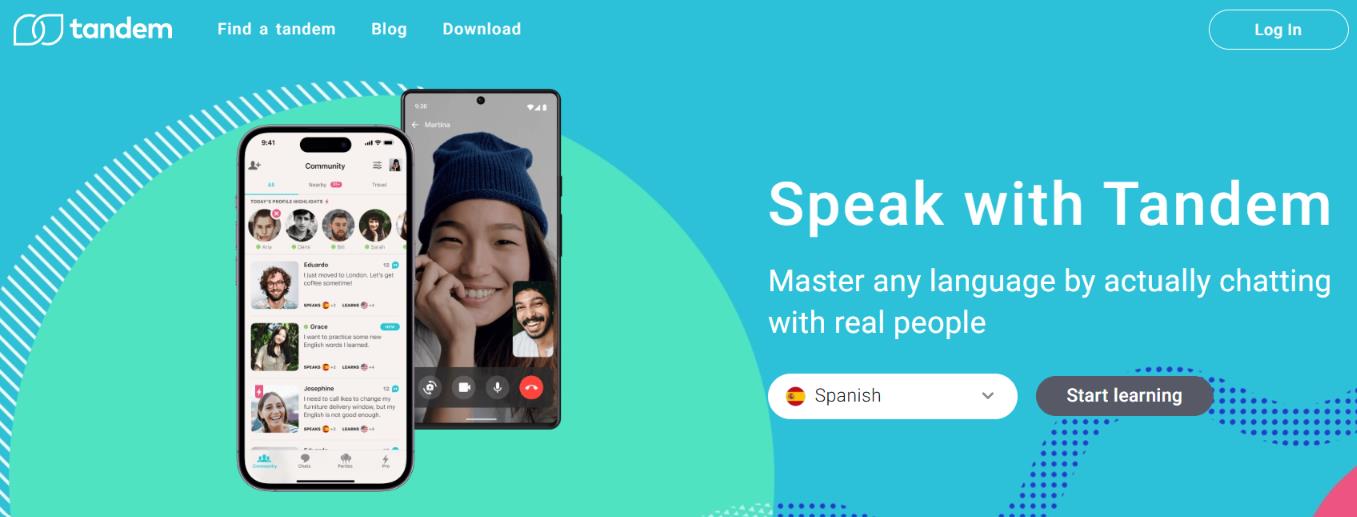
Tandem pairs you with native Italian speakers for free language exchange, making it one of the most cost-effective ways to get real conversation practice. Since it works both ways, you'll typically help your partner with English while they help you with Italian, which keeps things balanced and genuinely social. It's active enough that finding a partner is rarely difficult, though the platform includes a lot of social features beyond language exchange that not everyone will use.
Features:
- Free language exchange with native Italian speakers,
- Text, voice, and video chat options,
- Correction tools to fix your partner's messages in real time,
- Large, active user base,
- Filter partners by location and interests,
- Optional paid plan to remove ads and refine search.
Price:
- Free to use,
- Paid plan from around £6.99 a month for extra search and filtering features.
Pros:
- Genuinely free conversation practice,
- Large, active community of native speakers,
- Two-way exchange keeps things balanced,
- Real-time correction tools built in,
- Good low-cost complement to paid apps.
Cons:
- Quality of practice depends on your partner,
- No structured curriculum,
- Includes social features you may not need.
Best for: Learners on a budget who want regular, informal conversation practice and don't mind the exchange going both ways. It works particularly well alongside a structured app like Duolingo or Babbel.
Browse our intermediate level Italian tutors
Comparative table of the best apps to learn Italian
Struggling to choose between all ten? This table lays out each app side by side, so you can quickly compare what it's best for, whether it's free or paid, and its main focus, making it easier to pick the right combination for your own learning style.
|
App |
Best for |
Free or paid |
Focus |
|
FindTutors |
Real conversation practice |
Free to browse, pay per lesson |
Live 1:1 tutoring |
|
GoStudent UK |
Structured, guided learning |
Subscription |
Live 1:1 tutoring |
|
italki |
Flexible, wide tutor choice |
Pay per lesson |
Live tutoring & exchange |
|
Duolingo |
Absolute beginners |
Free, paid option |
Gamified vocab & grammar |
|
Babbel |
Realistic dialogue practice |
Paid, from £12.95/month |
Structured lessons |
|
Busuu |
Speaking & pronunciation |
Free, paid option |
Speech-focused course |
|
Mondly |
Variety and novelty |
Free, paid option |
Gamified & chatbot |
|
Pimsleur |
Pronunciation & listening |
Paid, from £15/month |
Audio-based method |
|
Memrise |
Long-term vocabulary |
Free, paid option |
Spaced repetition |
|
Tandem |
Budget conversation practice |
Free, paid option |
Language exchange |
Apps are a tool, not a substitute for real conversation
Every app on this list is genuinely useful, but none of them can fully replace talking to a real person. Apps are excellent for building vocabulary, drilling grammar, and creating a consistent daily habit, all of which matter.
What they can't do is correct your pronunciation in real time, adapt a whole lesson around your specific weak points, or push you to actually think and respond in Italian under natural conversational pressure. That's where tutoring and live conversation pratice still have the edge.
Working with an Italian tutor gives you instant, personalised feedback and genuine accountability, both of which tend to accelerate progress far faster than solo app use alone. The most effective approach for most learners is combining the two: use an app to build your foundations, then use regular tutoring sessions to actually put that knowledge into practice.
Our top 3 picks of the best apps to learn italian
FindTutors
For genuine conversational progress, nothing beats real, personalised feedback from a native tutor, and it's free to get started. It's the best pick for anyone who's plateaued with solo apps or simply learns faster through real conversation, whatever their starting level.
Duolingo
The best free entry point for building vocabulary and basic grammar before you start speaking regularly. Its gamified, low-pressure format makes it ideal for absolute beginners who want an easy daily habit without spending anything before committing further.
Pimsleur
Unmatched for pronunciation and listening comprehension, especially if you'd rather learn hands-free. It suits learners who want to sound genuinely natural in Italian and who can fit audio-only lessons into a commute or everyday routine.
Together, these three cover what matters most: real conversation, solid foundations, and confident pronunciation. Whichever combination you choose, the fastest path to fluency is almost always a mix of self-study and real practice, so pairing an app with private Italian lessons is well worth considering from the start.
Frequently asked questions about the best apps to learn Italian
➕ What is the best app to learn Italian? |
|
It depends on your goal. For real conversation practice, FindTutors or italki are the strongest options since you're speaking with an actual person. For building vocabulary and grammar for free, Duolingo is the easiest place to start. |
➕ Can I learn Italian by myself? |
|
Yes, up to a point. Apps like Duolingo, Babbel, and Memrise can take you through the basics on your own. To move beyond an intermediate level, though, most learners benefit from real conversation practice with a tutor or exchange partner. |
➕ Is Italian in Duolingo good? |
|
Duolingo's Italian course is solid for beginners, covering core vocabulary and grammar in a fun, low-pressure way. It's less extensive than some of Duolingo's other language courses, so it works best alongside another resource once you pass the early levels. |
➕ How can I quickly learn Italian? |
|
Combine daily app practice with regular speaking sessions. Apps build your vocabulary and grammar quickly through repetition, while a tutor helps you apply it in real conversation, which is usually the fastest way to see genuine progress. |
➕ How long does it take to become conversational in Italian using apps? |
|
With consistent daily use, most learners reach a basic conversational level in around three to six months. Progress speeds up significantly once you add regular speaking practice, since apps alone rarely build real conversational confidence on their own. |
➕ Should I combine an app with a private tutor? |
|
Yes, this is generally the most effective approach. Apps are great for building vocabulary and grammar independently, while a tutor provides the real-time correction, personalised feedback, and conversational practice that apps simply can't replicate. |
Did you like this article? Share it now
Nachhilfeunterricht.de: Eines der führenden Nachhilfe- und Unterrichtsportale in Europa
Use our Smart Finder