 Like
Like


Exploring Euclid’s Theorem: The Foundation of Prime Numbers and Their Infinite Nature
Euclid's contributions to mathematics are monumental, and among them, one of the most profound is Euclid's Theorem on the infinitude of prime numbers. This elegant and timeless theorem, proposed over two thousand years ago, forms the foundation of number theory and continues to influence modern cryptography and computational science. Whether you're revising for an exam or simply curious about maths, working with a private maths tutor can help this topic click into place.
Content Table
Who Was Euclid?
Euclid was a Greek mathematician, often called the "Father of Geometry." His most famous work, Elements, compiles definitions, theorems, and proofs that laid the groundwork for Euclidean geometry. In Book IX of the Elements, Euclid presented a simple but powerful proof that there are infinitely many prime numbers, a result known today as Euclid's Theorem.
Find an Online Maths Tutor for Private Lessons
What Are Prime Numbers?
A prime number is a natural number greater than 1 with no positive divisors other than 1 and itself. Examples include 2, 3, 5, 7, 11, and 13.
Prime numbers are the building blocks of natural numbers, since every natural number can be factored uniquely as a product of primes. This property is known as the Fundamental Theorem of Arithmetic.
Euclid's Theorem
Euclid's Theorem states that there are infinitely many prime numbers. This may seem obvious today, but proving it was a remarkable achievement in Euclid's time.
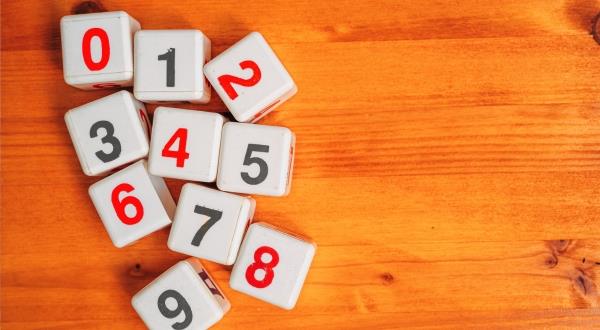
Examples of Prime Numbers
Here are the first several prime numbers, in order:
2, 3, 5, 7, 11, 13, 17, 19, 23, 29, 31, 37, 41, 43, 47, 53, 59, 61, 67, 71...
This list continues without end, which is exactly what Euclid's Theorem proves: no matter how far you go, there's always another prime waiting to be found.
The Proof
Euclid's original proof is a classic example of proof by contradiction:
- Suppose there are only a finite number of primes: p₁, p₂, ..., pₙ.
- Consider the number Q = (p₁ × p₂ × ... × pₙ) + 1.
- Q is not divisible by any prime in the list, since it leaves a remainder of 1 when divided by each one.
- Therefore, Q is either a prime number itself, or it has a prime factor not in the original list.
- Either way, this contradicts the assumption that we had listed every prime.
Hence, there must be infinitely many prime numbers.
A worked example of prime numbers
Suppose you believed 2, 3, 5, and 7 were the only primes. Then Q = (2 × 3 × 5 × 7) + 1 = 211. Checking Q against 2, 3, 5, and 7 shows none divide it evenly, meaning 211 is either prime itself (it is) or has a prime factor missing from the original list. Either outcome proves the original list was incomplete.
This proof is admired for its clarity, simplicity, and deep implications. It remains one of the first rigorous mathematical proofs in history and helped establish the foundations of mathematical logic.
Why Is This Important?
The significance of Euclid's Theorem extends far beyond historical curiosity:
- Number theory: it underpins other key results involving primes, including the distribution of primes, twin primes, and Goldbach's conjecture.
- Cryptography: modern encryption techniques, such as RSA, rely heavily on the properties of large prime numbers and their scarcity in higher numerical ranges.
- Computational mathematics: algorithms that test for primality or generate primes are built on the understanding that such numbers never run out.
For students working towards GCSE or A-Level maths, this theorem is a useful entry point into number theory topics that appear in exam questions on primes, factors, and proof techniques.
Extensions and Generalisations
Over the centuries, Euclid's proof has inspired mathematicians to develop alternative proofs and explore deeper generalisations. Euler, for instance, showed that the sum of the reciprocals of the primes diverges, offering another way of proving there are infinitely many of them. Mathematicians have also explored primes in arithmetic progressions, prime gaps, and prime-generating formulas.
One related open question is the twin prime conjecture, which asks whether there are infinitely many pairs of primes that differ by exactly 2 (like 11 and 13). It remains unsolved to this day, showing that even simple-sounding questions about primes can stretch the limits of modern mathematics.
Bringing It All Together
Euclid's Theorem is a reminder that some of the most powerful ideas in mathematics come from remarkably simple reasoning. Understanding why prime numbers never run out opens the door to deeper topics in number theory, cryptography, and beyond. If you'd like support making sense of proofs like this one, online tutors can help break the logic down step by step.
Frequently Asked Questions About Prime Nubers and Euclid's Theorem
➕ Why is 1 not a prime number? |
|
A prime number must have exactly two positive divisors: 1 and itself. Since 1 only has one divisor (itself), it doesn't meet this definition, so it's excluded from the list of primes. |
➕ Why is 2 a prime number? |
|
2 is only divisible by 1 and itself, which satisfies the definition of a prime. It's also the only even prime number, since every other even number is divisible by 2 as well as itself. |
➕ What is the smallest prime number? |
|
The smallest prime number is 2. It's the first number that fits the definition of having exactly two divisors: 1 and itself. |
➕ How can I identify a prime number? |
|
Check whether the number can be divided evenly by anything other than 1 and itself. If no other whole number divides it exactly, it's prime. For larger numbers, testing divisibility by smaller primes up to its square root is an efficient method. |
➕ How are prime numbers used in cryptography? |
| Modern encryption methods like RSA rely on the fact that large prime numbers are difficult to factor, making it hard for outsiders to break the code without knowing the original primes. |
Did you like this article? Share it now

Marjolin Jahja
(49)
English Language tutor in London specalised in offering online lessons classes adapted to the needs of each student. My classes are designed to help you reach your goals.Contact
Teaches Physics, Applied Mathematics, Maths, Algebra, Primary school, Secondary school, GCSE, University, Programming, Probability and Statistics, After-school tuition and SATs classes
Contact
Use our Smart Finder