 Like
Like

Finding the right words: 10 effective tips on how to improve Spanish vocabulary

One of the most rewarding parts of learning a new language is being able to recognise words that were once a mystery. Many English-speaking students face some common challenges when it comes to learning Spanish vocabulary, however. False friends, pronunciation hurdles, and patchy memorisation can stall progress and turn your bilingual goals into a more daunting task than previously anticipated.
Whether you're a complete beginner or an intermediate learner, expanding your range of Spanish words and phrases can drastically improve your fluency and boost your confidence when it comes to conversations.

The key to success lies in understanding that vocabulary acquisition is a highly personal process - finding the right learning techniques suited to your style and goals can make all the difference.
Let's run through ten practical tips to help you learn Spanish vocabulary effectively - and retain it for the long term!
Content Table
Key takeaways
-
Learning common words first gives you more opportunities to use Spanish vocabulary in day-to-day interactions
-
Watching and listening to media from a variety Spanish-speaking countries allows you to hear the range of vocabulary words used around the world
-
Placing new words in context by memorising full sentences deepens your understanding of definitions, as well as grammar rules
-
Challenging yourself to recall vocabulary words without looking at your study provides you with the most accurate measure of your progress
-
Working with a private Spanish tutor who adapts to your learning style is one of the fastest ways to improve your vocabulary
Spanish vocabulary made easy
{{SR:Use the spaced repetition system}}
Use the spaced repetition system
Space it out!
The spaced repetition system, or SRS, is a proven learning techniques for memorising new vocab. This method involves reviewing new words at increasing intervals, strengthening your long-term memory and improving your ability to recall vocabulary.
This impact on long-term recollection means that you're less likely to find yourself cramming the night before an important exam!
Practice with flashcards
Perfect recall comes with practice.
Flashcards utilise SRS together with active recall, making them a highly efficient study tool for memorisation. You can create digital flashcards using a variety of apps or take the traditional route with paper cards. The key is to test yourself on a regular basis in order to commit new Spanish vocabulary words to memory.
Turn on Spanish subtitles for films and TV programmes
Is it possible to learn Spanish by watching TV?
Watching both Spanish-language content is an excellent way to improve both your listening and vocabulary. You’ll be able to see how words are used in context, helping you learn useful phrases while improving your pronunciation at the same time.
If new films and programmes feel inaccessible at first, try watching a favourite show that you've seen before with Spanish subtitles or dubbing - being familiar with the characters' lines and plots will help you pick up new words more easily.
Focus on high-frequency vocabulary
As they say, use it or lose it!
Instead of trying to memorise words at random, focus on the most commonly used Spanish words. Start by learning nouns and verbs that appear in everyday conversations. For example, words like casa (house), trabajo (work), and comer (to eat) will be immediately useful in most day-to-day situations.
Feeling overwhelmed by long word lists? Start with the 'super siete' - seven of the most frequently used verbs in Spanish:
|
Spanish verb |
English translation |
|---|---|
|
ser |
to be (essential/permanent characteristics) |
|
estar |
to be (temporary states, locations) |
|
tener |
to have |
|
hay (from haber) |
there is/there are |
|
ir |
to go |
|
querer |
to want/to love |
|
gustar |
to like/to be pleasing to |
Learning these verbs helps you follow the 80/20 rule when learning Spanish: concentrating on the 20% of the language that yields 80% of results!

Create word associations
What if you could learn five words for the price of one?
A great way to expand your vocabulary is to memorise word families. Word families consist of vocabulary groups relating to a single base word. Look at the examples in the table below:
|
Base word |
Meaning |
Word family (examples) |
English translations |
|---|---|---|---|
|
amar |
to love |
amor, amable, amador, enamorar, amante |
love, kind/lovable, lover/loving of, to fall in love, lover |
|
pan |
bread |
panadero, panadería, panecillo, empanar |
baker, bakery, bread roll, to bread/coat |
|
flor |
flower |
florero, floral, florecer, florista |
vase, floral, to bloom, florist |
|
mar |
sea |
marino, marítimo, marea, submarino |
sailor/marine, maritime, tide, submarine |
|
sol |
sun |
solar, solana, soleado, insolación |
solar, sunny spot, sunny, sunstroke |
|
luz |
light |
lucir, luminoso, iluminar, luciérnaga |
to shine, luminous, to illuminate, firefly |
|
tierra |
earth/soil |
terrenal, terrestre, territorio, enterrar |
earthly, terrestrial, territory, to bury |
|
libro |
book |
librería, librero, libreta, libreto |
bookstore, bookseller/bookcase, notebook, script/libretto |
|
cantar |
to sing |
canción, cantante, cantautor, cántico |
song, singer, singer-songwriter, chant |
|
correr |
to run |
corredor, recorrido, corrida, correrías |
runner/corridor, route/distance covered, bull run/race, escapades |
|
vida |
life |
vital, vivaz, vivir, vivienda |
vital, lively, to live, dwelling/home |
|
mano |
hand |
manual, manejar, maniobra, manopla |
manual, to handle/operate, maneuver, mitten |
|
agua |
water |
acuático, aguacero, aguar, aguado |
aquatic, downpour, to dilute/water down, watery |
|
hacer |
to do/make |
hecho, hacedor, deshacer, rehacer |
fact/deed, maker/doer, to undo, to redo |
|
ver |
to see |
visión, vista, visible, vistazo |
vision, sight/view, visible, glance |
|
poder |
to be able to |
poderoso, potencia, potencial, empoderar |
powerful, power, potential, to empower |
|
venir |
to come |
venida, convenir, intervenir, provenir |
arrival, to suit/agree, to intervene, to come from |
|
escribir |
to write |
escritor, escritura, inscrito, manuscrito |
writer, writing/scripture, enrolled/inscribed, manuscript |
|
pensar |
to think |
pensamiento, pensativo, repensar, pensador |
thought, thoughtful, to rethink, thinker |
|
jugar |
to play |
jugador, jugada, juguete, juguetón |
player, move/play (sports/games), toy, playful |
In addition to boosting your vocab count, making connections with word families helps you to identify types of words through their spelling patterns. This makes it easier to decipher new words when you encounter them for the first time.
Write short stories
If you find that certain words simply won't stick, create a short story that incorporates the vocabulary in a memorable way!
-
Use the names of friends and family members for the characters in your story - this makes the plot easier to hold in your mind!
-
Set your story in a familiar location - this can be a place from your real life, such as your home, school, or workplace, or a fictional space from a book or TV programme that you find interesting.
-
Write a short narrative (around 300 words) that features your characters performing the verbs and interacting with the nouns that you want to commit to memory.
Placing Spanish vocabulary into a personalised narrative like this helps to reduce that frustrating tip-of-the-tongue feeling when searching for words!
Practise in person and on paper
Active practice is essential to improving your Spanish vocabulary. Try to speak Spanish as often as possible, particularly with native speakers of the language. Writing personal journal entries in Spanish also helps to reinforce what you’ve learned and enhances retention - as a bonus, you can look back through your diary to see how much progress you've made.
Try out language games and apps
Tired of textbook questions?
Language learning games and apps make learning Spanish vocabulary fun and engaging. These tools often offer free trials, and feature multiple choice quizzes, sentence building exercises, and other interactive activities that help you learn vocabulary in an enjoyable way.
You can also check out our review of The 10 Best Apps to Learn Spanish to find the right one for you!
Find some real-world examples
Struggling to pick up vocabulary? Try picking it up literally!
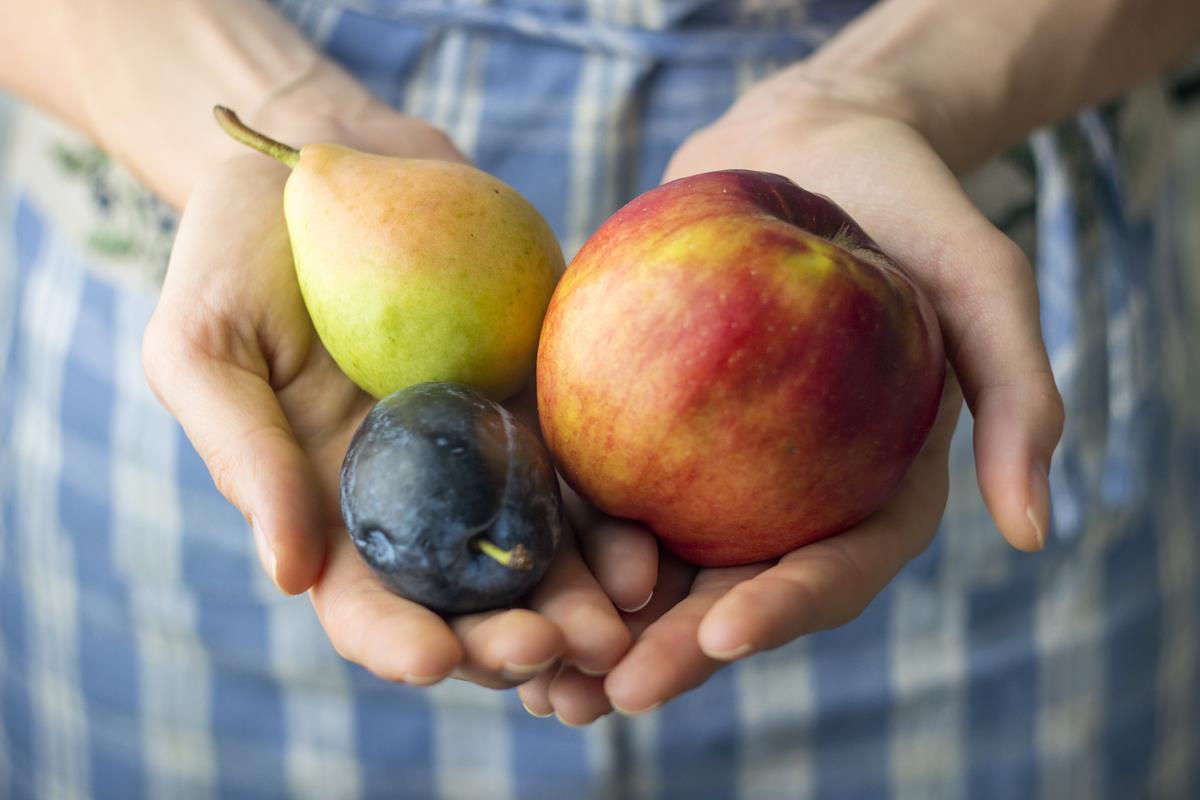
One effective method for improving your Spanish vocabulary around everyday objects is to name items while holding them in your hands. Pieces of clothing, books, stationery, tech devices food and drink words can all be memorised this way.
This technique is known as embodied learning, and involves taking a multi-sensory approach to language acquisition. While embodied learning is often used when teaching new words to children, teens and adults can benefit just as much from leveraging tactile memory to meet their language goals.
Set realistic goals and track your progress
Quien mucho abarca, poco aprieta.
Enthusiasm is wonderful, but don't bite off more than you can chew! Learning Spanish vocabulary takes time, and setting small, manageable goals is a reliable way to stay motivated. Aim to learn a specific number of new words each week, track your progress, and celebrate your achievements. Patient, consistent practice is the way to build a solid mental bank of vocabulary.
Common mistakes when using Spanish vocabulary
As you embark on your language learning journey, there are a few common mistakes that learners often make when using Spanish vocabulary. Let’s look at some of these errors, and what we should be saying instead!
Mistake 1: false friends
False friends, or false cognates, are words that look similar in both English and Spanish but have different meanings. While Spanish does have a number of cognates taken from English (such as organización, televisión and original) there are other words that often result in incorrect translations:
|
English word |
Spanish false friend |
Meaning in Spanish |
|---|---|---|
|
actual |
actual |
current/present |
|
embarrassed |
embarazada |
pregnant |
|
fabric |
fábrica |
factory |
|
exit |
éxito |
success |
|
journey |
jornada |
day |
Mistake 2: overcomplicating translations
Don’t overcomplicate things by translating directly from English! Many Spanish words don’t have an exact English translation, which is why it’s so important to understand their context. For example, tener means 'to have' but is used in many expressions that would typically use a different verb in English, such as tener hambre (to be hungry).
Mistake 3. mixing up regional differences in vocabulary usage
The Spanish language varies across the Spanish-speaking world, so certain words can change meaning depending on the country.
-
In Mexico, guapo translates as 'handsome', however in Spain, it can also mean 'cool' or 'good-looking'.
-
In Argentina, a strawberry is know as una frutilla, whereas in Spain, una fresa is more common.
-
In Spain, un piso is the name used for a flat, while in many Latin American countries, people refer to the same type of living space as un apartamento.
These regional variations highlight the importance of learning context and recognising local terms.
Want to make sure you're on the right track with your studies? Read our blog on The 20 most common Spanish mistakes to see how you can avoid them!

Quick tips and long-term learning solutions
-
Try creating mental associations based on the world around you, such as associating the word rojo (red) with the colour of a stop sign. The more vivid the image, the easier it will be to recall the word later on.
-
Search Google in your target language: typing words in Spanish helps to commit vocabulary to muscle memory, which in turn strengthens your neural networks!
-
Post on social media in Spanish: Take opportunities to use your new vocabulary when posting online, or join a forum to meet other language learners!
-
Read up on the science of memory: knowing how your brain works can give you an advantage when it comes to building vocab - including the importance adequate sleep, nutrition and movement for effective study routines.
-
Sign up for private Spanish classes to get expert vocabulary and pronunciation coaching.
From short-term memory to long-term knowledge
There are so many ways to improve your vocabulary in Spanish, but don't forget that the best method is simply the one that works for you.
We hope you found the ideas and resources here helpful - and if you're preparing for a test, why not take a look at our 50 Spanish Idioms to Use in Speaking Exams?
¡Qué tengas suerte con tus estudios!
Did you like this article? Share it now
Spanish tutor in Barcelona Ciudad specalised in offering online lessons classes adapted to the needs of each student. My classes are designed to help you reach your goals.
Teaches Catalan, Spanish, Maths, All courses, English Language, English as a foreign language, German, Latin, History, Physics, GCSEs and A Levels for adults, Photography and French classes
Use our Smart Finder