
Practice time can vary, but it's generally recommended to practice at least 20-30 minutes a day, gradually increasing as you become more comfortable. Quality practice is more important than quantity, so focus on practicing effectively and consistently.

Private Guitar Lessons in Kent: Find Expert Teachers
Discover the joy of learning with private Guitar lessons in Kent. Master new techniques with a dedicated Guitar tutor.
£30/hr First class free Luke Guitar Tutoring, also able to tutor Music Theory!We will develop your technique through a mixture of learning and analysing songs of your choice and mine, alongside a look at various riffs... Guitar Tutoring, also able to tutor Music Theory!We will develop your technique through a mixture of learning and analysing songs of your choice and mine, alongside a look at various riffs... |
|||
 £40/hr First class free Leo All styles and abilities helping you along your musical journey to being the best musician you can beHi, my name’s Leo. I have over 10 years of playing and performing experience in a number of styles and would love to share your musical jou... All styles and abilities helping you along your musical journey to being the best musician you can beHi, my name’s Leo. I have over 10 years of playing and performing experience in a number of styles and would love to share your musical jou... |
|||
 £45/hr 5.0(2 Reviews)Lenny Bass Guitar Lessons | Learn with a Professional Musician & #1 iTunes ArtistLearn bass from a pro! I’m Lenny, a bassist with 30+ years of experience and multiple #1s on iTunes.✅ Beginner to advanced – groove, techni... Bass Guitar Lessons | Learn with a Professional Musician & #1 iTunes ArtistLearn bass from a pro! I’m Lenny, a bassist with 30+ years of experience and multiple #1s on iTunes.✅ Beginner to advanced – groove, techni... |
|||
 £22/hr First class free Arkidonlang Nongkseh Want to learn Guitar but don't know where to start?I will teach you the basic foundation of guitar making it simpler for you to understand and learn guitar quicker .... which then carries ov... Want to learn Guitar but don't know where to start?I will teach you the basic foundation of guitar making it simpler for you to understand and learn guitar quicker .... which then carries ov... |
|||
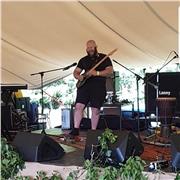 £17/hr First class free Abd Novice Guitar Teacher and Music ProductionI have a First Class Honours Degree at ICMP Bachelor's in Creative Musicianship. (BACM) Novice Guitar Teacher and Music ProductionI have a First Class Honours Degree at ICMP Bachelor's in Creative Musicianship. (BACM) |
|||
 £30/hr First class free Joseph Music Tutor for beginners on the Guitar, Bass or UkuleleI have a Bachelor's Degree in Commercial Music at Canterbury Christ Church University, play bass, acoustic and lead guitar for 3 other band... Music Tutor for beginners on the Guitar, Bass or UkuleleI have a Bachelor's Degree in Commercial Music at Canterbury Christ Church University, play bass, acoustic and lead guitar for 3 other band... |
|||
Other tutors
Frequently Asked Questions (FAQs)
🎶 How much should I practice between lessons?
👧 What should I bring to my first guitar lesson?
Bring your guitar (if you have one), a notebook for taking notes, and any materials your guitar tutor may have recommende
🎸 Do I need to learn to read music to play the guitar?
Reading music is not a requirement, especially for beginner guitar students. Many guitarists use tablature (tabs) or chord charts to learn songs. However, learning to read music can be beneficial for more advanced playing.
🎼 How long will it take to play my favorite songs?
The time it takes to play your favorite songs depends on their complexity and your skill level. Simple songs can be learned relatively quickly, while more intricate pieces may take longer.
🕐 Can I learn online or should I take in-person guitar lessons?
Both options are valid. Online lessons offer flexibility, while in-person lessons provide direct interaction with a teacher. Choose the option that suits your learning style and schedule
Guitar lessons near me in Kent
What is the best age to start learning guitar?
The best age to start learning the guitar varies from person to person and depends on individual factors such as interest, motor skills development, and attention span. Children as young as 6 or 7 can start learning the guitar with the right-sized instrument and a patient, supportive tutor. At this age, they can begin developing basic finger coordination and foundational skills. However, many children and teenagers often start learning around the ages of 10 to 14 when they have more cognitive and physical maturity to grasp concepts and practice consistently. Adults of any age can also start learning the guitar and can benefit from their focused determination and understanding of practice discipline. Ultimately, the "best" age is when a person is enthusiastic and motivated to learn, regardless of their age. It's never too early or too late to begin the rewarding journey of playing the guitar.
Overcoming difficulties when learning the guitar
Overcoming difficulties when learning the guitar requires patience, perseverance, and a positive mindset. Embrace challenges as opportunities for growth rather than setbacks. Break down complex techniques into manageable steps, practicing each component diligently. Slow, focused practice fosters muscle memory and precision. Celebrate small achievements along the way, reinforcing your progress. Seeking guidance from a skilled teacher or online resources can provide valuable insights. Remember that progress takes time, and setbacks are natural. By maintaining consistent practice, staying patient, and maintaining a willingness to learn, you can successfully navigate and conquer the difficulties of learning the guitar.
Learning music theory for playing the guitar
Learning music theory for playing the guitar can greatly enhance your understanding of the instrument and open up new possibilities for creativity and expression. Music theory provides a structured framework for understanding how music works, including scales, chords, harmony, rhythm, and more. Here's why learning music theory is valuable for guitarists:
- Chord Progressions: Understanding music theory helps you construct and interpret chord progressions. This knowledge enables you to create more interesting and diverse chord sequences, enhancing your rhythm playing and songwriting.
- Scales and Soloing: Music theory teaches you about scales and modes, which are essential for crafting guitar solos and improvisation. Knowing the relationships between notes in a scale allows you to create melodic and expressive solos that fit harmonically.
- Transposition: With music theory, you can easily transpose songs into different keys. This skill is valuable for accommodating singers' vocal ranges or adapting songs to suit your guitar's capabilities.
- Songwriting and Composition: A solid understanding of music theory empowers you to compose your own music, experiment with different chord progressions, and create unique melodies and harmonies.
- Reading Music: While not mandatory, knowing music theory makes it easier to read standard notation, expanding your access to a broader range of musical styles and pieces.
- Communicating with Musicians: Music theory provides a common language for communicating musical ideas with other musicians. This is particularly useful when collaborating, performing, or jamming with fellow instrumentalists.
- Unlocking Creativity: Rather than limiting your creativity, music theory can serve as a wellspring of inspiration. It provides a toolbox of options that you can draw from to enrich your playing and composition.
- Understanding Genre Conventions: Different genres have distinct harmonic and rhythmic patterns. Music theory helps you understand and replicate these conventions authentically within a specific style.
- Analyzing Songs: You'll be able to analyze and deconstruct songs to understand why they sound the way they do, which can lead to deeper insights into your favorite music.
- Continuous Learning: As you progress in your guitar journey, your understanding of music theory will continue to evolve. It's a lifelong pursuit that adds depth and sophistication to your playing.
While learning music theory can seem daunting, start with the basics and gradually build your knowledge. You don't need to become a music theory expert overnight. Many resources, both online and in books, offer beginner-friendly explanations and exercises tailored specifically for guitarists. As you apply theory to your playing, you'll find that it enriches your musical experience and empowers you to explore new avenues of creativity on the guitar.